Blog

Announcements & the public record

Fabrice RochetteBy Fabrice Rochette

Sovereignty · August 27, 2026

How do you want to deploy digital identity in your country?

Digital identity and business registries with verifiable credentials. The difference between proprietary silos with vendor lock-in and a sovereign infrastructure your country controls.

Verifiable credentials are becoming a reality, and more and more governments are adopting them for the digital identity of their citizens and the registries of their businesses. The question that defines everything else is not whether to adopt them, but on what infrastructure to deploy them.

When digital identity is deployed on a proprietary platform, every service keeps its own copy of the citizen's identity and of the business record. Nothing interoperates outside the platform, license costs climb, and the technology decisions no longer belong to the State but to the vendor.

Vendor lock-in is not just a technical problem. It is a cession of sovereignty: whoever controls the platform controls the rules, the data, and the continuity of the service.


Fabrice RochetteBy Fabrice Rochette

Events · August 24, 2026

Meet us at the Global Digital Collaboration Conference

GDC26 brings together thousands of builders, standards bodies, and policymakers across digital identity, September 1 to 3 at Palexpo Geneva. Verana will be there to talk public trust registries, sovereign ecosystems, and AI agent trust.

Meet us at the Global Digital Collaboration Conference, September 1 to 3 at Palexpo Geneva.

GDC brings together thousands of builders, standards bodies, and policymakers across digital identity: wallets, verifiable credentials, trust frameworks, technical standards, and regulation. Exactly the conversations the internet's missing trust layer needs.

We will be there to talk Verifiable Trust: public trust registries, sovereign ecosystems, and how services and AI agents identify and trust each other before the first message. If you are building wallets, trust frameworks, or agentic AI, come find us.

Fabrice RochetteBy Fabrice Rochette

Video · August 24, 2026

Verana in 3 minutes

Verifiable credentials are becoming a reality. The next problem is interconnecting ecosystems. Our new 3-minute video shows how Verana answers it, with sovereign ecosystems, verifiable services, and one public Trust Graph.

Verana in 3 minutes: watch the video

Watch the video on YouTube (3 minutes)

Verifiable credentials are becoming a reality. The groundwork is laid: issuer, holder, verifier, one trust triangle, standardized at W3C, the OpenWallet Foundation, Trust over IP, DIF, and ISO. And implementations are arriving in every sector: eIDAS 2.0 and the EUDI wallet, mobile driving licenses, agent payments, legal-entity identifiers, travel, supply chains, content authenticity.

Fabrice RochetteBy Fabrice Rochette

Use cases · August 17, 2026

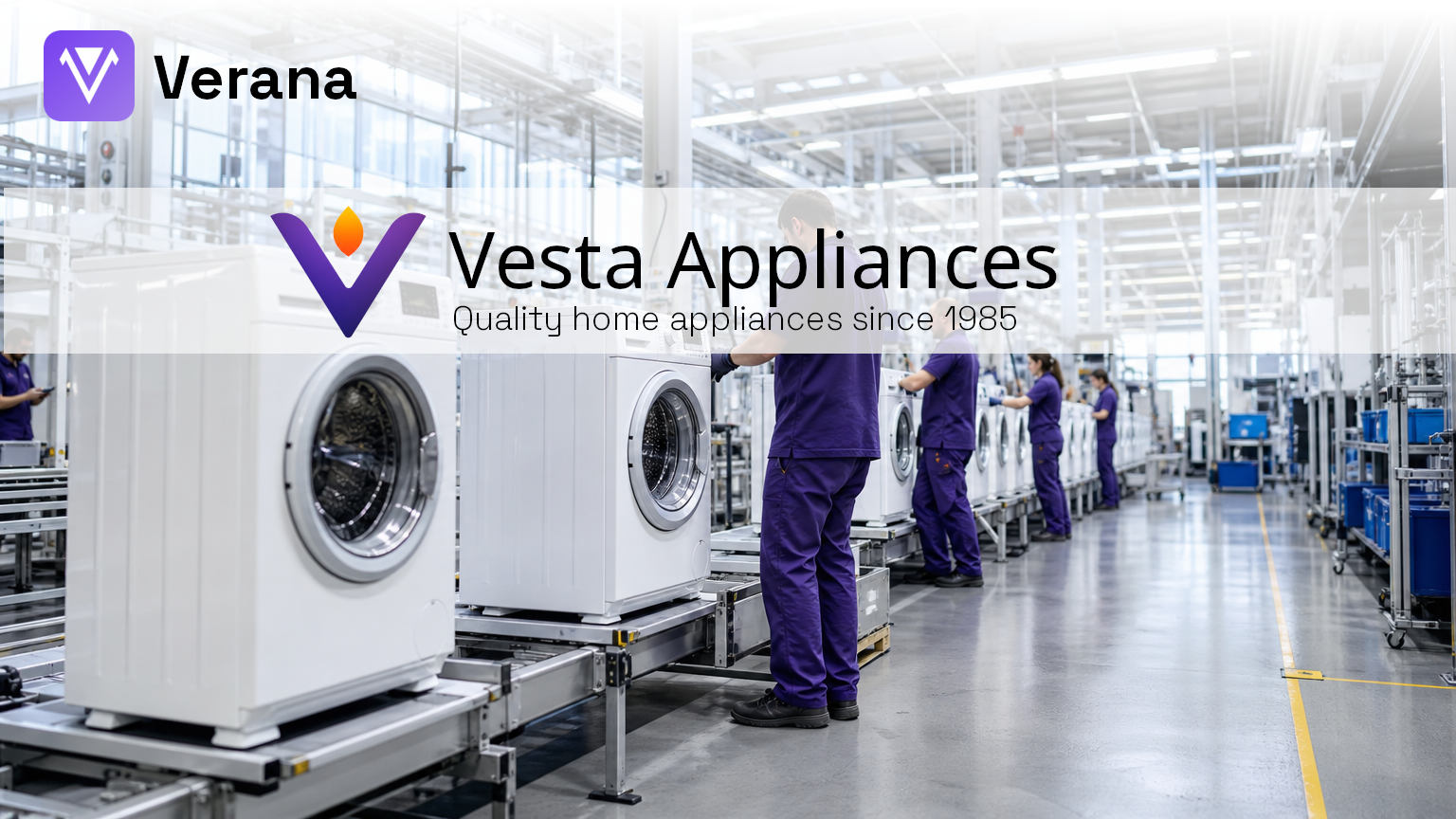
Vesta Appliances: from impostors to Proof-of-Trust

The Vesta use case is now published in the FIDES Use Case Catalog. A fictional manufacturer, a real trust chain, and an impostor whose perfect uniform is not enough — all running live on the Verana testnet.

A repair technician rings your doorbell. The badge looks right. The uniform looks right. And nothing about either can be checked.

That moment — a stranger at your door, asking to be let in on the strength of a logo — is where the Vesta use case begins. It is now published in the FIDES Use Case Catalog, and every step of it runs live on the Verana testnet, where you can play it end to end with a real wallet.

Vesta Appliances (demo) is a fictional Swiss manufacturer — quality home appliances since 1985 — with a problem every real brand shares: customers cannot tell the difference between Vesta and anyone dressed as Vesta.

Fabrice RochetteBy Fabrice Rochette

Mission · June 24, 2026

A public trust layer with a built-in separation of powers

A trust layer for the internet cannot be owned or controlled by any single party. Here is how Verana is built so that none can.

Rebuilding trust is not just about technology. It is about who holds the power.

Verana is rebuilding digital trust for an era of AI agents, identity theft, and opaque online governance. But a trust layer for the internet cannot be owned or controlled by any single party. If it could, it would simply reproduce the problem it set out to solve: a web where a handful of gatekeepers decide who and what is trustworthy.

So Verana is built on a deliberate separation of powers, carried by two independent institutions that check and balance each other.